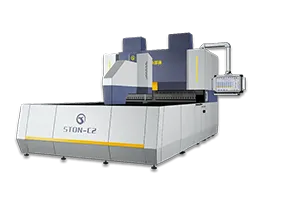
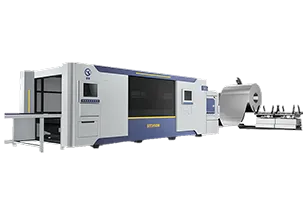
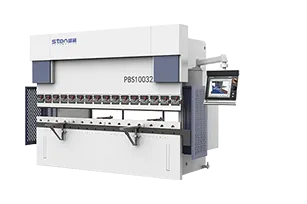
İnşaattan sorumluyuz----- üretimden sorumluyuz----- eğitimden sorumluyuz

Manual punch work slows production, creates uneven holes, and raises rework costs. When one wrong position affects bending or assembly, the whole order can suffer. A CNC turret punch press helps factories make repeated punch features faster, cleaner, and with better control.
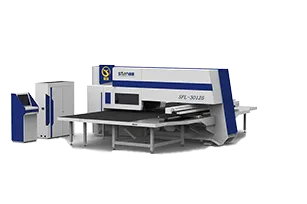
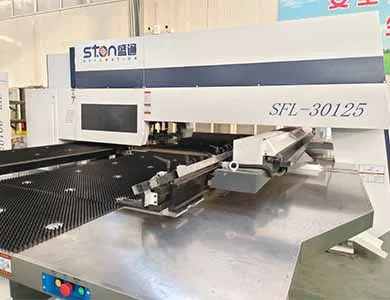
A CNC turret punch press is a programmable punching machine that uses a rotating turret, multiple tools, and CNC control to punch holes, slots, emboss marks, louvers, and formed features in sheet metal. It is widely used for cabinets, enclosures, ventilation panels, chassis, metal furniture, and OEM fabrication.
A CNC taret zımba presi is a press machine used to process sheet metal by pushing a punch through a metal sheet into a die. The machine uses computer numerical control to move the sheet, select the correct tool, and control the punching sequence. This allows the operator to create many features with repeatable accuracy.
The word turret refers to the rotating tool holder. A turret punch can hold multiple tools at the same time. These tools may create round holes, square holes, slots, knockouts, louvers, emboss features, or formed shapes. Because the tool turret holds multiple tools, the machine can finish many punch tasks without constant manual tool changes.
For factories that make electrical cabinets, filing cabinets, HVAC panels, door parts, telecom enclosures, and machinery covers, this matters. A CNC turret punching machine helps turn flat sheet metal into accurate, ready-to-bend parts. It keeps each hole, slot, and formed feature in the right position.
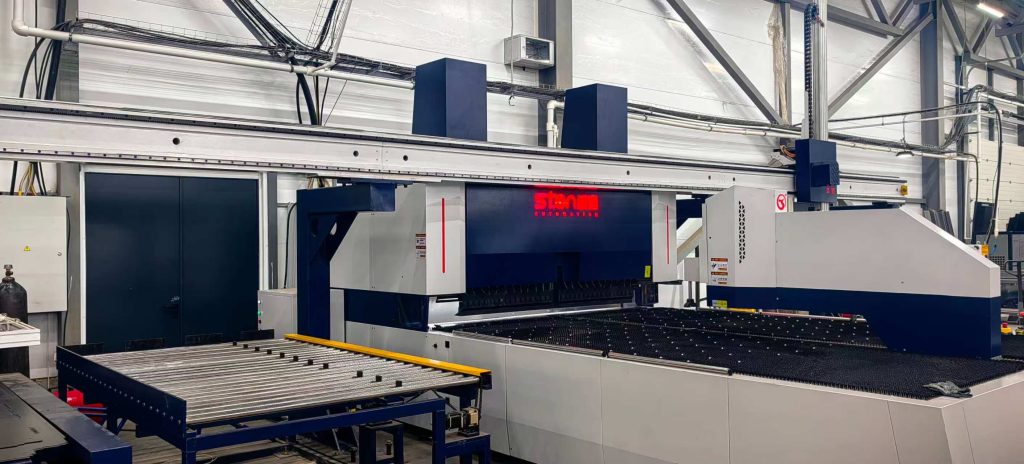
A turret punch machine starts with a metal sheet placed on the machine table. The clamp holds the sheet. The CNC system moves the sheet along the X and Y axes. The rotating turret selects the correct tool. Then the punching head moves down to complete each punch.
The basic process is simple:
| Step | İşlem | Purpose |
| 1 | CAD Drawing Review | Confirms the part shape, hole layout and formed features |
| 2 | CNC Program Setup | Defines tool selection and punching sequence |
| 3 | Sheet Loading | Places the blank or metal sheet on the worktable |
| 4 | Sheet Positioning | Moves the sheet to the correct punching position |
| 5 | Delme | Creates holes, slots, louvers or embossed forms |
| 6 | Unloading | Transfers finished parts to bending or assembly |
The CNC turret punching process is useful because the machine repeats the same programme with stable results. Once the CAD file and programme are ready, the operator can process production runs with less manual measuring.
This is why modern CNC punch equipment is common in sheet metal fabrication. It helps factories reduce mistakes and improve production efficiency, especially when parts have a high number of holes or repeated hole patterns.
Manufacturers use turret punch presses because they need speed, accuracy, and flexibility. A single part may need many punch holes, slots, knockouts, and formed areas. Doing that by hand or with simple punch machines takes time and creates quality risk.
A CNC turret punch can complete punching work with high precision. It can also reduce secondary operations by combining hole punching, trimming, marking, and selected forming in one workflow. For many cabinet and enclosure manufacturers, this improves the whole production route from sheet processing to bending and assembly.
Main advantages include:
For B2B buyers, the key value is not only speed. It is stable output. Stable holes help stable assembly. Stable assembly helps on-time delivery.

A turret punch is best for parts that need repeated holes, slots, louvers, emboss marks, knockouts, and formed features. It is also a strong choice when the same product appears often in production.
Typical applications include:
| Sektör | Common Parts | Punch Features |
| Electrical Cabinet | Doors, side panels and mounting plates | Mounting holes, cable openings and ventilation holes |
| Filing Cabinet | Drawers, cabinet bodies and lock areas | Handle holes, lock holes and slots |
| HVAC | Air duct panels and ventilation plates | Louvers, perforations and repeated holes |
| Telecom / Power | Server racks and control enclosures | Cable holes, connector holes and cooling holes |
| Door & Frame | Door skins and reinforcement parts | Hinge holes, lock holes and formed edges |
| Metal Furniture | Shelves, storage panels and brackets | Slots, fixing holes and shaped openings |
| Mutfak Eşyaları | Stainless steel panels and covers | Holes, embossed marks and cutouts |
A CNC punching machine works especially well when the same part design repeats over time. It helps factories keep the same hole location, same forming depth, and same sheet positioning across batches.
STON customers often use turret punching solutions for electrical cabinets, metal furniture, ventilation panels, toolboxes, chassis, and customized fabrication. These products need practical speed, clean holes, and reliable repeatability.
There are different types of CNC turret punch equipment. The right choice depends on your product, material thickness, punching force, sheet size, tonnage, and automation plan.
| Type | Main Feature | En İyi Kullanım Alanı |
| Mechanical CNC Turret Punch | Economical and stable for standard punching tasks | Standard holes, trimming and louvers |
| Servo CNC Turret Punch | Fast response, efficient control and flexible operation | High-mix production and precision punching |
| Hydraulic Turret Punch | Strong and controlled punching force | Forming operations and heavy-duty punching |
| Punch-Laser Combination | Combines punching with laser contour cutting | Parts requiring both punched features and complex profiles |
A mechanical CNC turret punch is often a practical choice for factories that need an economical machine for standard punching. A servo drive system can improve response and control, especially where faster cycle time and energy efficiency matter.
Some factories need more than one process. In that case, a punch-laser combination can be useful. It allows the factory to punch formed features and use laser cutting for contour work.
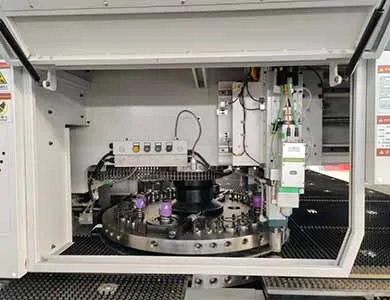
The tool is the part that shapes the final result. A good tool creates clean holes. A worn tool creates burr, poor edges, and unstable dimensions. Tool selection should match the metal or material, sheet thickness, hole shape, forming need, and production volume.
The turret rotation also affects speed. If the programme jumps between too many tools without planning, the cycle time increases. A smart programme groups similar punch tasks and reduces unnecessary turret rotation.
Important tool planning points include:
A good CNC control system makes this process easier. It helps the machine move the sheet, choose the tool, and control each punch step. But good tooling and programming still matter. The best machine needs the right setup.
A CNC turret punch press and laser cutting equipment both process sheet metal, but they are not the same. Laser cutting is strong for complex contour shapes. A turret punch is strong for repeated holes, louvers, emboss features, and formed shapes.
| İşlem | En İyi Kullanım Alanı | Main Value |
| Turret Punching | Repeated holes, slots, louvers and embossed features | Fast feature processing and forming |
| Lazer Kesim | Complex outer contours and flexible profiles | No punching tools required |
| Punch-Laser Combination | Mixed parts containing both holes and complex contours | More complete sheet metal processing in one system |
A laser can cut holes, but it cannot easily make a raised emboss or louver form. A turret punch can do that with the right tool. This is why many factories use both processes in one production system.
For example, a power enclosure may need cable holes, ventilation holes, a formed logo area, and an outer profile. CNC turret punching can handle the punch and formed features. Laser cutting can handle the contour if the profile is complex.
Before choosing a punching machine, buyers should review real production data. The machine must match the workpiece, not just the catalogue. A machine that looks powerful may still be wrong if the sheet size, tool count, or automation layout does not fit the factory.
Key specifications include:
| Specification | Neden Önemli? |
| Maximum Sheet Size | Defines the largest sheet the machine can process |
| Sheet Size Range | Helps plan sheet loading and material handling |
| Material Thickness | Affects tool selection and required punching force |
| Machine Tonnage | Defines the machine’s punching-force capacity |
| Number of Tool Stations | Determines how many tools can remain installed |
| Turret Rotation Speed | Affects tool selection and changeover time |
| Strokes / Hits per Minute | Affects production output for repeated punching |
| CNC System | Affects programming, control and ease of operation |
| Sheet Positioning | Affects hole location and punching accuracy |
| Automation Options | Affect labor requirements and long-term production planning |
Buyers should also check the machine frame, side structure, punching head, clamp design, safety guarding, and maintenance access. These details affect uptime.
A good supplier should ask for drawings, material type, sheet size, thickness, number of holes, required formed features, and target output. At STON, we use this information to recommend a practical configuration instead of forcing every buyer into one standard model.
Automation can improve CNC turret punching when the production is stable enough. For example, automatic sheet loading and unloading can reduce manual handling. Robotic sheet handling can improve workflow for repeated panels. Sorting systems can help organize finished parts before bending.
Automation is useful for:
However, automation must fit the real factory layout. The supplier should review sheet stack height, blank size, part weight, unloading method, safety space, downstream press brake or panel bender process, and exception recovery.
STON provides sheet-metal automation and CNC fabrication equipment, including turret punch presses, CNC panel benders, press brakes, laser cutting units, flanging machines, automatic loading and unloading systems, and complete production lines. This allows us to think beyond one machine and support the whole workflow.
CNC control is the brain of the punch machine. It controls the programme, tool selection, sheet movement, turret position, and punching sequence. With modern CNC technology, the machine can store different product programmes and repeat them with stable results.
A strong CNC system helps reduce setup time. Operators do not need to measure every feature by hand. The programme guides the process. This is useful when factories process different cabinet models, door parts, HVAC panels, or sheet metal materials.
CNC control also supports better process planning. It can help reduce unnecessary sheet movement, improve tool order, and support repeatable punching tasks. In daily production, that means fewer mistakes and easier training.
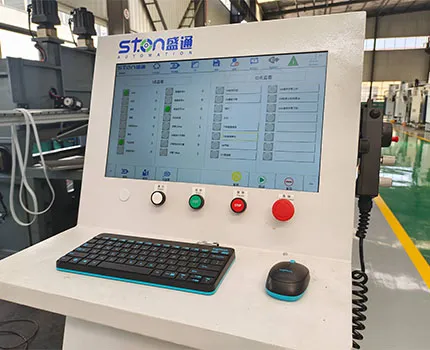
STON is a Sheet-Metal Automation & CNC Fabrication Equipment Manufacturer. We provide OEM/ODM and factory-direct CNC equipment for global industrial customers. Our product system covers CNC turret punch press equipment, panel benders, press brakes, laser cutting units, automatic loading and unloading systems, flanging machines, and full sheet metal production lines.
For a turret punching project, we help customers review drawings, material thickness, sheet size, punch features, tool strategy, production volume, site layout, and future automation needs. We can support different configurations, including mechanical, servo, and punch-laser options.
Our target customers include sheet-metal job shops, electrical and filing cabinet manufacturers, door and frame factories, HVAC ducting producers, appliance and kitchenware plants, telecom and power enclosure makers, laboratory and education equipment manufacturers, EV charging enclosure makers, metal furniture and racking plants, system integrators, distributors, importers, and industrial automation partners.
A good punch solution should bring more than a machine. It should bring stable quality, easier operation, reliable service, spare parts support, commissioning, training, and long-term production confidence.
A CNC turret punch press is a programmable sheet metal punching machine that uses a rotating turret, multiple tools, and CNC control to punch holes, slots, louvers, emboss marks, and formed features. It is widely used for cabinets, enclosures, HVAC panels, metal furniture, chassis, and OEM sheet metal parts.
A turret punch machine works by clamping a metal sheet, moving it along the X and Y axes, selecting the correct tool from the rotating turret, and using the punching head to create each hole or form. The CNC system controls the sheet position, tool selection, and punching sequence.
A turret punch press is a type of CNC punching machine with a rotating turret that holds multiple tools. A general CNC punching machine may have fewer tool options, while a turret punch press can switch between different punches, dies, louvers, slots, and forming tools more efficiently.
CNC turret punching is suitable for sheet metal parts with repeated holes, slots, knockouts, louvers, emboss features, and formed details. Common products include electrical cabinet panels, filing cabinets, ventilation panels, control enclosures, telecom cabinets, door parts, kitchen equipment panels, and metal furniture components.
A turret punch press is better for repeated holes, louvers, embossing, forming, and high-volume punch work. Laser cutting is better for complex contours and flexible profile cutting. Many factories use both processes depending on the part design, material thickness, hole pattern, and production volume.
A CNC turret punch press can process many sheet metal materials, including cold-rolled steel, galvanized steel, stainless steel, aluminum, and pre-painted metal sheets. The suitable thickness depends on the machine tonnage, tool type, punching force, and material strength.
To choose the right turret punch press, you should check sheet size, material thickness, hole pattern, forming requirements, number of tools, production volume, automation needs, and available workshop space. A reliable manufacturer should review your drawings before recommending a machine configuration.
A servo CNC turret punch press offers better control, fast response, energy-saving operation, and stable punching accuracy. It is suitable for factories that need high precision, flexible production, repeated hole processing, and stable performance across different sheet metal parts.
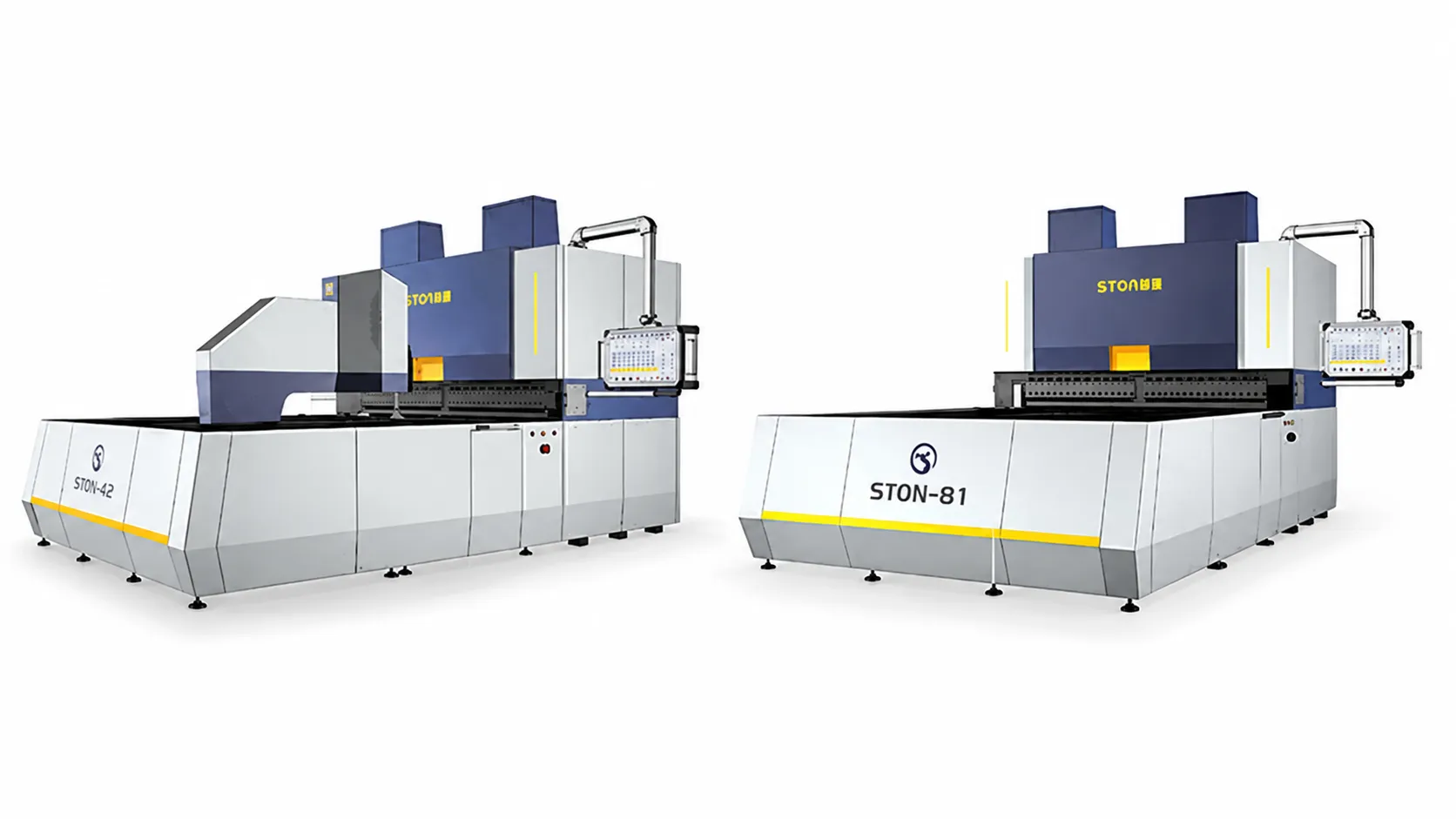
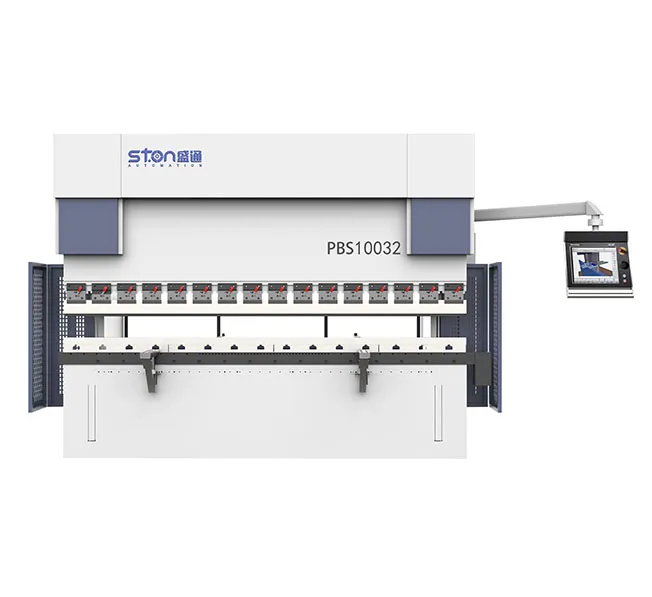
İster mevcut bir hattı geliştiriyor ister yeni bir projeye başlıyor olun, STON üretiminiz için bir CNC çözümünü özelleştirecektir.